Buster Keaton’s well-known film Sherlock Jr. (1924) featured exquisite scene changes and perfectly edited chase scenes, which many subsequent comedies have worshipped. However, this article will focus on the meta-cinema of Sherlock Jr. (1924), utilizing a oneiric narrative structure and screen mirroring reflections to shape the form of spectatorship. Unlike some famous meta-films, Buster Keaton did not show the production process of the film industry, such as Day for Night(1973), nor integrate a fractionalized self like in 8 ½(1963). However, he applied the narrative structure of intransparency to show the audience’s movie experience.

Buster Keaton plays the role of a theatre moving picture operator (the projectionist) as well as an amateur detective in Sherlock Jr.. In the film’s reality, the projectionist is falsely accused of stealing a pocket watch from his beloved girl’s father and is consequently banished from the house. Returning to the cinema projection room, he screens a movie and enters a dream. In this dream, his soul leaves his body and enters the movie he envisions, constructing an imaginary film that mirrors the real world. This use of dreams and mirrors as metaphors for film in the 1924 cinema has significantly influenced how audiences perceive and watch movies since the early days of cinema.
The play-within-a-play in the oneiric creates a screen mirror. Midway through the film, where the projectionist is daydreaming during the screening, it heralds the superposition of the projectionist’s identity with that of the audience. Given that the out-of-body exhibition is a dream adventure, the projectionist’s spirit stays invisible to the theater audience. The two plays combine to integrate Sherlock Jr.: the first play is the audience in the theatre watching; the second is the play from the perspective of the projection room in a dream. The projectionist enters the theater and watches the film like any other audience member. Here, the composition represents a frame within a frame, indicating the perspective from the projection room, the same as the audience. When the projectionist becomes uncomfortable with the intimacy between the male and female protagonists, he leaps up and inserts himself into the film. He is then thrown out of the movie frame by the male protagonist. The male protagonist can see the projectionist while he remains invisible to the audience because his gaze aligns with the spectators’. People cannot see themselves unless through a mirror, and the screen functions as such a mirror. Following a comedic transition, the camera gradually zooms out, changing from a frame within a frame composition to merely displaying the movie screen itself. The process completes the projectionist self-projection on the mirror.
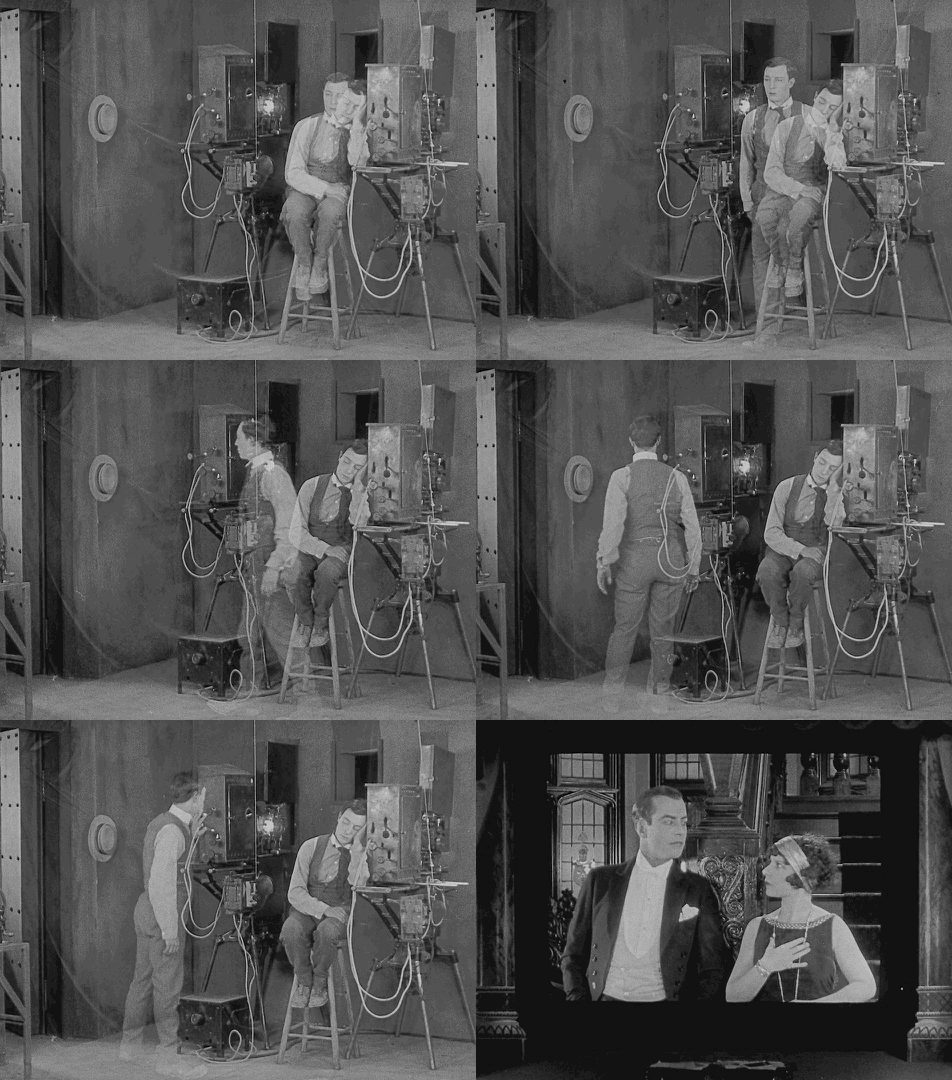
Without resorting to Freud’s psychoanalysis, one can conclude from the film that the projectionist’s self-projection is a better self. He has gone from an amateur detective to the world’s greatest detective; his clothes, top hat, and gloves have all become more formal and classy. Jean-Louis Baudry suggested the screen-mirror model by linking the screen to the mirror. The film applies a play-within-a-play approach to achieve what the projectionist wants in film reality: to catch the thief and win the girl’s heart. The projectionist simulates reality and achieves the sense of ‘self,’ integrating fragments of phenomena and life experiences into a unified meaning, similar to how the audience watches from the center of the visual experience.
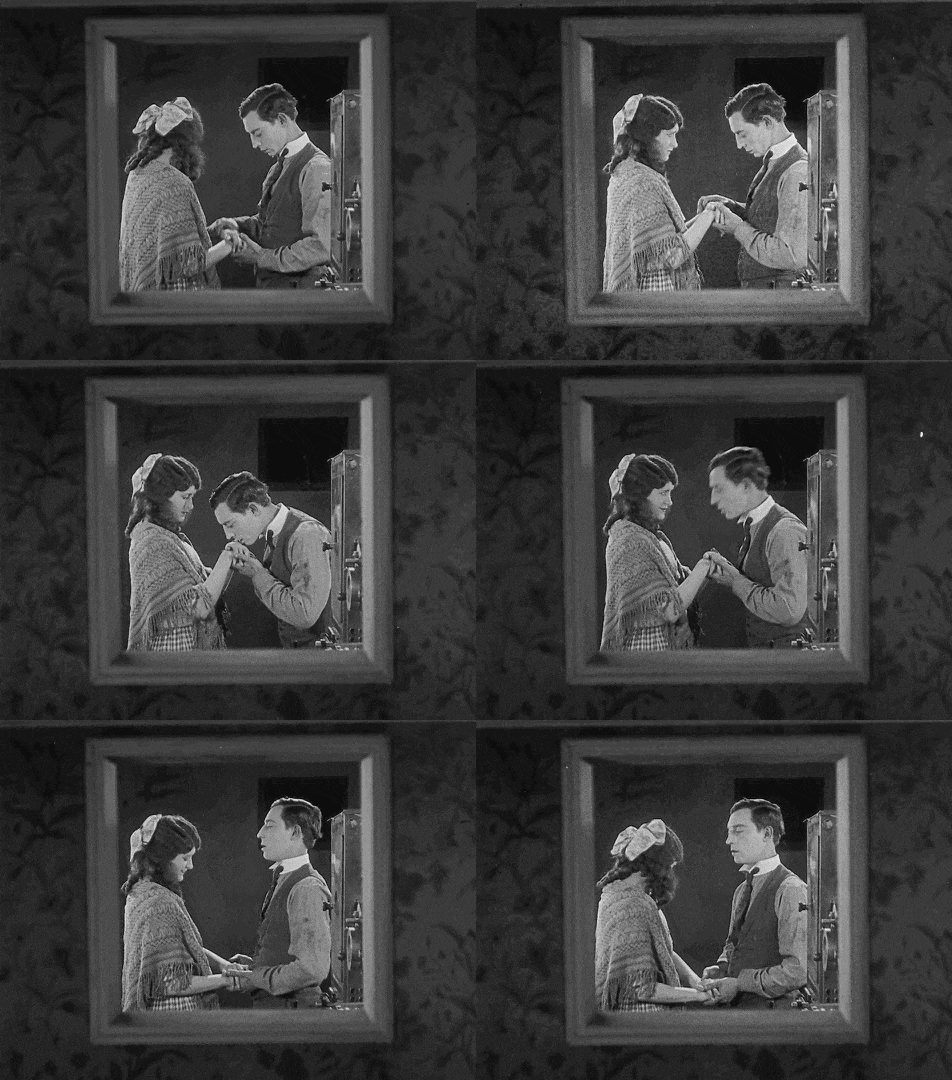
The film’s end is precisely the process of the audience leaving the cinema. The projectionist finally wakes up from his dream and sinks into deep melancholy in the projection room. With the dream ending, the perspective from the projection room disappears. The second play from the perspective of the projection room is separated from the first play of the audience in the theatre. The separation symbolizes a detachment of spectators who leave the cinema. In the film, the girl finds out the truth and looks for him. The projectionist imitates the film footage that the audience in the theatre is watching, puts a ring on the girl’s finger, kisses her, and wins her love. In Sherlock Jr. (1924), Buster Keaton not only reconstructed the spectatorship by superimposing two plays but also implicated the audience in accepting the influence of movies on life through double identification, suggesting that imitating movies may have a positive result.
Reference
- Baudry, Jean-Louis, and Alan Williams. “Ideological Effects of the Basic Cinematographic Apparatus.” Film Quarterly, vol. 28, no. 2, 1974, pp. 39–47. JSTOR, https://doi.org/10.2307/1211632. Accessed 28 Sept. 2024.
- Siska, William C. “Metacinema: A Modern Necessity.” Literature/Film Quarterly, vol. 7, no. 4, 1979, pp. 285–89. JSTOR, http://www.jstor.org/stable/43796115. Accessed 28 Sept. 2024.
- Matt Levine,A Ribbon of Dreams: Dreams and Cinema,Moving Image,Aug 3, 2012,https://walkerart.org/magazine/dreams-cinema-history-matt-levine
- Corrigan, Timothy, and Patricia White. The Film Experience: An Introduction. 2023.
 shuqin Yan
Leave a comment