
In Memoria (2021), Thai director Apichatpong Weerasethakul draws audience into a serene, surreal realm defined by sound. Starting with an intriguing yet straightforward premise, a woman perceives a booming noise unheard by others. From the sound, the film gradually transforms into a profound exploration of memory, perception, and existence. Here, sound runs through the whole film and makes it emerge as the essence of the cinematic journey. I will analyze the sound inside of Jessica’s head.

At the outset, a sudden loud “bang” interrupts the quite and opens a space in Jessica’s reality. The sound has no clear source and any visible cause. The sound Jessica hears not only serve a narrative function, but also becomes a part of her emotional and physical state. As theorist Michel Chion refers to as “acousmêtre,” the unseen voice feels ghostly: invisible yet impactful, present, and even disturbing. The sound in the film never fades away. It returns repeatedly, like a hidden language that cannot be translated. Therefore, the sound presents not merely noise but a signal, perhaps from the unconscious or the past. The film and Jessica’s experience induces insomnia, which implies that Jessica stays outside the normal rhythm of time and space.
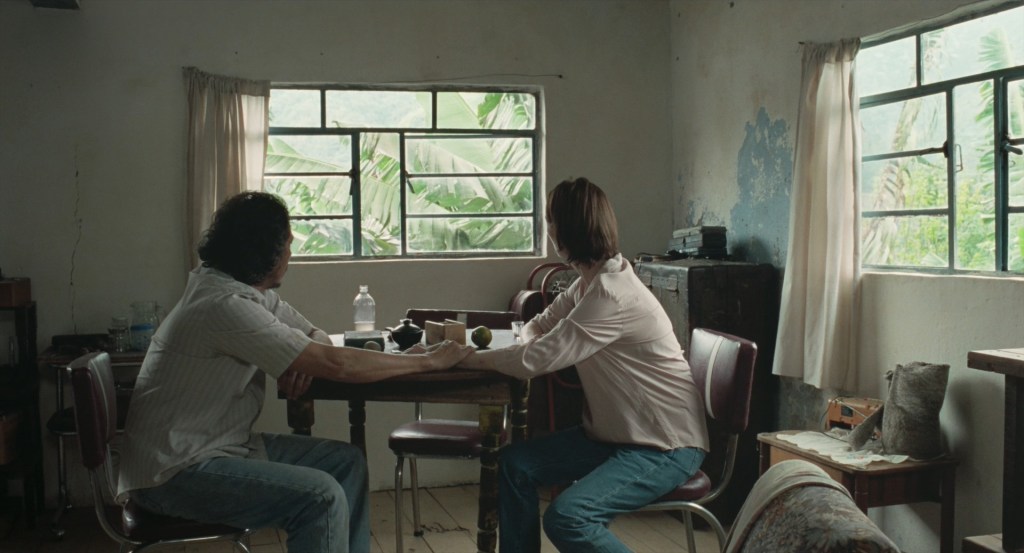
Apichatpong Weerasethakul is known for his slow, gentle style of filmmaking, where bodies, nature, and silence often hold more meaning than words or action. In Memoria, sound is not something audiece understand logically, instead, people only feel it, (listen to it) in the body. Sound merges with memory, nature, and even the unconscious. The film suggests that what the audience hear is not only sound waves, but hidden feelings and histories, quietly waiting to be heard.
 shuqin Yan
Leave a comment